About
Founded in November 2023, the MindSys Research Group at the University of Colombo School of Computing is an interdisciplinary initiative at the crossroads of philosophy, science, and technology. The group pioneers research in cognitive science by integrating computing technologies with deep philosophical inquiry, drawing from both Eastern and Western traditions.
A defining feature of MindSys is its holistic approach—bridging Buddhist philosophical insights with contemporary Western philosophy to explore consciousness, cognition, and intelligence. Their research spans scientific studies on human cognition, computational modeling, machine learning, and artificial intelligence, with a strong focus on brain-computer interfaces (BCI), neurofeedback, and robotics.
Committed to advancing human-machine interactions, the group develops cutting-edge solutions that optimize IoT systems and enhance human-machine-thing interactions. By revolutionizing healthcare, communication, and automation, MindSys strives to push the boundaries of cognitive and AI research, making technology more intuitive, responsive, and impactful.
Keywords: Cognitive Science | Artificial Intelligence (AI) | Machine Learning | Conscious AI | Philosophy of Mind | Eastern Philosophy | Buddhism and Cognition | Brain-Computer Interface (BCI) | Neurofeedback | Human-Machine Interaction | Human-Machine-Thing Interaction | Embodied Cognition | Situated Cognition | Cognitive Robotics | Cognitive Systems | Cognitive Modeling | Affective Computing | Computational Modeling | Decision-Making and Cognition | Behavioral and Cognitive Neuroscience | AI Ethics | Responsible AI Development | Internet of Things (IoT) | Smart Systems | Neuroscience and AI | Human-Robot Interaction | Augmented and Assistive Technologies | Sustainable Farming Technologies | Agricultural Robotics | Serious Games | Skill Acquisition and Learning | Psychophysiological Responses.
Projects
Project 1: Integrated Robotics for Sustainable Coconut Farming
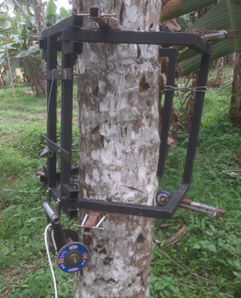
A multi-agent system combining a coconut tree-climbing robot and a harvesting drone to improve efficiency and sustainability in coconut farming. This project aims to reduce labor-intensive tasks, boost productivity, and minimize environmental impact.
Project 2: Enhanced Human-Machine-Thing Interaction
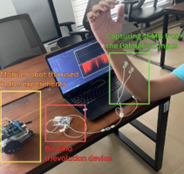
Exploring brain and body signal translation to control external devices such as robotic arms, vehicles, and prosthetics. The project integrates machine learning with IoT to improve BCI efficiency, reducing latency for seamless interaction between users and devices.
Project 3: Responsive Electrical Buzz Wire (EBW) for Multidisciplinary Research
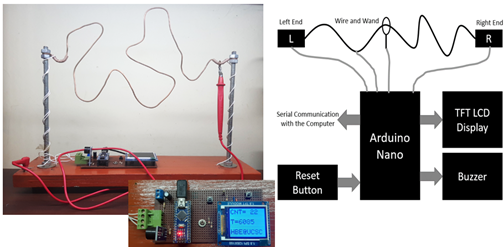
Developing an Arduino-based EBW system to study motor skills, attention, neurological disorders, learning processes, and psychophysiological responses. The device collects real-time interaction data, enabling precise research applications.
Project 4: Human-Following Robot for Office Automation
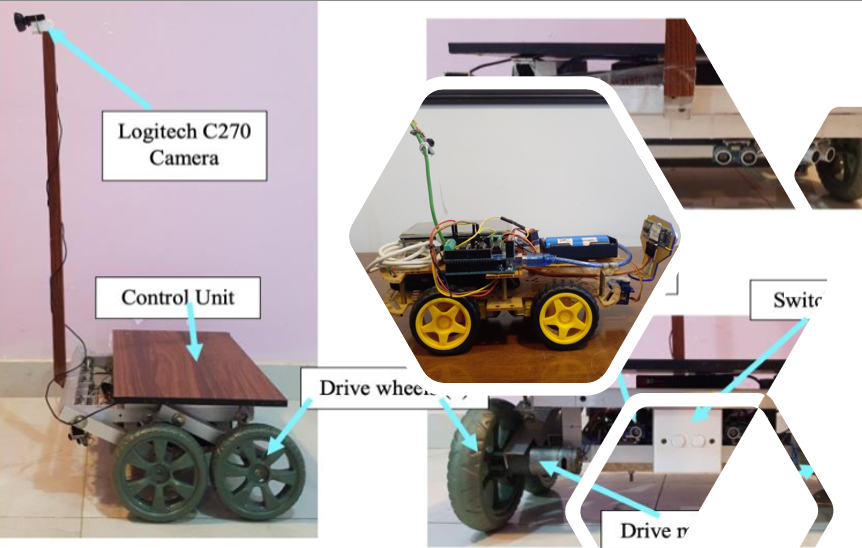
Creating a human-following robot to assist in transporting goods within office environments. Using Arduino for motor control and Raspberry Pi for processing and navigation, this project enhances productivity and workplace automation.
Project 5: ConsciousAI: Understanding AI Consciousness
Investigating levels of consciousness in artificial intelligence through computational modeling and philosophical synthesis. This project explores whether AI can exhibit consciousness and integrates Eastern and Western perspectives to redefine AI’s cognitive potential.
Project 6: Unlocking the Potential of Underutilized Data for Situated Cognition in Machine Learning
This project investigates the relevance and application of unattended or underutilized data in machine learning to enhance situated cognition, situated action, situated awareness, and episodic memory in cognitive systems. By leveraging underutilized data, the research aims to improve AI’s ability to contextualize experiences, adapt to dynamic environments, and develop memory-like functions. Inspired by related projects such as MyLifeBits and Lifelog, this initiative explores innovative data utilization strategies to advance cognitive AI, human-like memory modeling, and adaptive machine intelligence.
Research Team
Principal Investigator
Research Team
- Dr. K. H. E. L. W. Hettiarachchi – BIT (Col), MCS (Col), Ph.D. (Barcelona)
- Dr. L. N. C. De Silva – B.Sc. (Pdn), Ph.D. (Col)
- Mr. K. Thilakarathna – BIT (Col), MPhil (Col)
Research Interns
- Ramindu M. Jayasinghe
- Chinthana A. Gamachchige
Past Members
- A. A. Dilanga Harshani
- W. V. Janindu I. Wijetunga
- M. A. Visal Lochana
Publications
- H. Ekanayake, J. Wijetunga, “Enhancing the Realism and Immersion of the Electrical Buzz Wire Game,” in ICERI2024 Proceedings, 17th annual International Conference of Education, Research and Innovation, Seville, Spain, 2024, pp. 9131-9135. doi: 10.21125/iceri.2024.2301.
- J. Wijetunga, H. Ekanayake, L. De Silva, “Enhanced Rehabilitation Through Real-Time Hand Gesture Recognition Using S-EMG Signals,” in ICERI2024 Proceedings, 17th annual International Conference of Education, Research and Innovation, Seville, Spain, 2024, p. 9138. doi: 10.21125/iceri.2024.2306.
- W. V. J. I. Wijetunga, H. E. M. H. B. Ekanayake, and L. N. C. De Silva, “Few-shot learning for robotic vehicle control: hand gesture recognition with sEMG and reptile algorithm,” in International Conference on Applied and Pure Sciences, Faculty of Science, University of Kelaniya, Sri Lanka, 2024.
- D. Harshani and H. Ekanayake, “Development and Evaluation of a Research-Grade Electrical Buzz Wire,” in EDULEARN24 Proceedings, 16th International Conference on Education and New Learning Technologies, Palma, Spain, 2024, pp. 2382-2388. doi: 10.21125/edulearn.2024.0658.